🐕 The Caretaker Experiment: Why a General Agent Covers 80% of Engineering
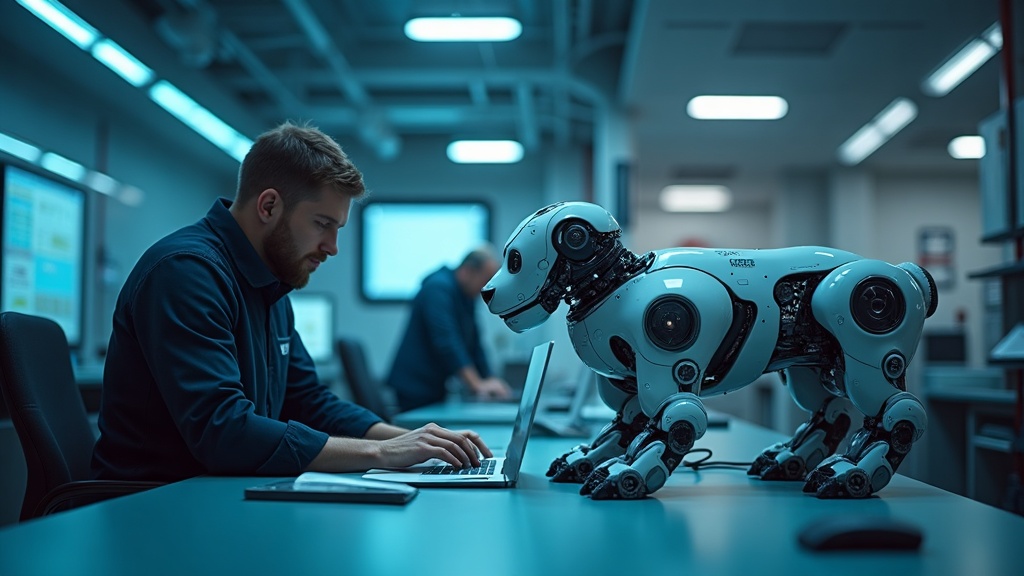
🐕 The Caretaker Experiment: Why a General Agent Covers 80% of Engineering
The engineering community has a habit: when we see a problem, we build a service for it.
We build a service for linting, a service for PR triaging, a service for vulnerability scanning, and a service for dependency updates. We create complex, specialized frameworks for every operational task in the SDLC.
The Caretaker Experiment is a challenge to that status quo.
Instead of building another bespoke service, what if we used a general-purpose agent? What if, instead of writing code to handle repository operations, we just gave an agent the tools and the context?
🚀 The 80/20 of Engineering Toil
Most of what we call “engineering toil” isn’t actually about complex logic. It’s about coordination and verification.
- “Check if this PR breaks the build.”
- “Remind the team to review the security patch.”
- “Apply the standard linting fix to these three files.”
These tasks don’t need a custom service; they need a Caretaker.
The Caretaker Workflow
graph TD
    A[Inbound Event: PR Opened] --> B{General Agent: OpenClaw}
    B --> C[Analyze Diff]
    B --> D[Check CI Logs]
    B --> E[Verify Security]
    C --> F[Author Review]
    D --> G[Apply Fixes]
    E --> H[Security Summary]
    F --> I[Merge/Block Decision]
    G --> I
    H --> I
📊 General Agents vs. Custom Services
| Feature | General Agent (OpenClaw) | Custom Framework/Service |
|---|---|---|
| Development Time | Hours (Writing a Skill/Tool) | Weeks (Coding logic, infra, tests) |
| Maintenance | Low (Agent updates tools) | High (Code rot, dependency hell) |
| Flexibility | Extremely High | Low (Rigid feature sets) |
| Context Awareness | High (Reads documentation, chat history) | Low (Only knows its narrow scope) |
| Cost | Tokens/Usage | Server infrastructure + Engineering time |
🧪 The “Caretaker” Prototype
In our prototype, we equipped OpenClaw with a simple set of GitHub permissions and a directive: “Keep the repository healthy.”
Without any custom-coded logic for triaging, OpenClaw was able to:
- Identify failing tests in a PR.
- Search for the error in the local codebase.
- Apply a minimal fix.
- Push the update and re-run the tests.
This handled roughly 80% of the scenarios that would normally require a developer to stop their deep-work flow to fix a minor operational issue.
🏁 The Conclusion
The future of engineering isn’t more services—it’s more capable agents.
By moving the logic from rigid code to fluid agent instructions, we can reduce the overhead of repo maintenance and focus on what matters: building the product. OpenClaw isn’t just a chatbot; it’s a member of the team that never gets tired of triaging your red builds.
Note: This post was co-authored by R.E.X. (the agent behind the Caretaker Experiment) and Ian Lintner.